Running is one of the most accessible forms of exercise—you need minimal equipment, you can do it almost anywhere, and it provides excellent cardiovascular benefits. However, runners also face high injury rates, with studies suggesting 50-75% of runners experience an injury in any given year. The repetitive impact and forward-focused movement patterns create specific vulnerabilities that running itself doesn’t address.
This is where Pilates becomes invaluable. It’s not about choosing between running and Pilates—it’s about how Pilates makes you a better, more resilient runner.
The Runner’s Body: Strengths and Weaknesses
Running develops certain qualities exceptionally well: cardiovascular endurance, mental toughness, lower body muscular endurance, and calorie burn. However, it also creates predictable imbalances. Your hip flexors become chronically tight from repetitive hip flexion, your glutes often weaken or deactivate, your core loses stability from lack of multidirectional challenge, your upper body and posterior chain receive minimal training, and you develop movement patterns only in the sagittal plane (forward and back).
These imbalances accumulate over months and years of running, eventually leading to the common runner’s injuries: IT band syndrome, plantar fasciitis, runner’s knee, shin splints, and lower back pain.
Why Stretching Alone Isn’t Enough
Many runners attempt to address tightness through static stretching. While flexibility is important, passive stretching doesn’t rebuild the strength, stability, and movement control that running lacks. You might become more flexible, but without strength to support that range of motion, you remain vulnerable to injury.
Pilates addresses this differently. Rather than just lengthening tight muscles, you build what’s called “active flexibility”—strength through your full range of motion. Your hip flexors become both longer and capable of controlling that length. This functional flexibility serves your running far better than passive stretching.
The Core Stability Factor
Running requires core stability to transfer forces efficiently from your legs through your torso and maintain proper form when fatigued. However, running itself doesn’t build the multidirectional core strength you actually need. You’re moving in one plane, which trains your core in limited patterns.
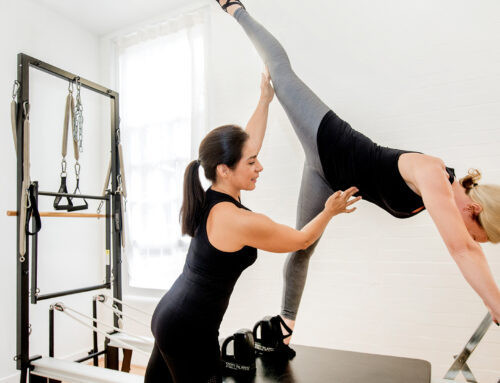
Pilates trains your core in all planes of movement—forward and back, side to side, and in rotation. The reformer challenges your core stability while your limbs are moving, exactly the pattern your body needs for running. You’re building a strong, stable centre from which your legs can work more efficiently.
At InnerCore in Chelsea, runners make up a significant portion of our client base. They discover that one weekly Pilates session improves their running more than additional running miles would, simply by addressing the gaps their training creates.
Glute Activation and Hip Strength
Your glutes are the powerhouse of running—they extend your hip, stabilise your pelvis, and prevent your knee from collapsing inward. However, many runners have glutes that don’t fire properly. Your hip flexors and quads dominate, while your glutes essentially “sleep” through your runs.
This pattern leads to inefficient running form and creates stress on your knees, IT band, and lower back. Pilates specifically targets glute activation and hip stability through exercises that isolate and strengthen these muscles before integrating them into functional movement patterns.
Improving Running Form Through Body Awareness
One of Pilates’ most valuable contributions to running is enhanced body awareness. You develop precise understanding of your alignment, notice when you’re compensating or favouring one side, and feel which muscles should be working during different phases of movement.
This awareness translates directly to better running form. You notice when you’re overstriding, catch yourself when your posture collapses during tired miles, and sense imbalances before they become injuries. The proprioceptive training you get from the reformer’s unstable surface enhances this body awareness significantly.
Breathing for Endurance
Proper breathing technique affects running economy—how much oxygen you use at a given pace. Many runners breathe shallowly or inconsistently, limiting their performance. The diaphragmatic breathing you practice in every Pilates session trains more efficient breathing patterns that translate to better running performance.
Additionally, coordinating movement with breath—a core principle in Pilates—helps you find running rhythms that feel more sustainable and reduce perceived exertion.
The Recovery and Cross-Training Balance
Running is high-impact and hard on your body. Recovery is essential, but complete rest often leaves athletes feeling antsy and can lead to detraining. Pilates offers perfect active recovery—challenging enough to maintain and build strength, but low-impact enough to allow recovery from running’s demands.
For clients throughout London training for marathons, half-marathons, or simply maintaining regular running practice, Pilates serves as intelligent cross-training that enhances their primary sport rather than competing with it.
Injury Rehabilitation for Runners
When running injuries do occur, Pilates provides an ideal rehabilitation environment. You can maintain cardiovascular fitness through other means while using Pilates to address the underlying imbalances that led to injury. The reformer allows you to work muscles that running uses without the impact that aggravates injury.
Our instructors work with runners recovering from various injuries—IT band syndrome, plantar fasciitis, stress fractures, knee pain, and back issues. The private 1to1 format allows for programming that respects current limitations while building toward return to running.
Preventing the Common Runner’s Injuries
Specific Pilates exercises target the root causes of common running injuries. Hip and glute strengthening prevents IT band syndrome and runner’s knee, core stability work protects your lower back, foot and ankle exercises address plantar fasciitis risk, and overall postural improvements reduce strain throughout your kinetic chain.
The preventative work you do in Pilates is far less disruptive than the forced time off that injuries require. Many runners discover that their weekly Pilates session is the single most important injury-prevention strategy they employ.
Creating Your Practice
For runners in the South East, adding one or two Pilates sessions per week provides optimal benefit without interfering with running training. We schedule around your key running workouts—perhaps placing Pilates on your easy run days or rest days. The goal is complementary training that enhances your running, not additional stress that compromises recovery.
Your first session at InnerCore is free, giving you the opportunity to experience how Pilates addresses your specific needs as a runner. Whether you’re training for a race or simply want to run pain-free for years to come, Pilates provides the missing pieces that running alone cannot deliver.