If you’re dancing five or six days a week, the idea of adding another form of training to your schedule might seem unnecessary, even excessive. Surely all that dancing is enough exercise? Yet many of the world’s leading dance companies and training institutions now mandate supplementary conditioning precisely because pure technique training, however rigorous, leaves specific gaps that only targeted cross-training can fill.
What Dance Training Does Brilliantly
Dance class excels at developing artistry, musicality, technical precision, and the specific movement vocabulary of your discipline. Hours of repetition build muscle memory, refine alignment within your technique, and develop the extraordinary body control that defines skilled dancing. None of this is in question.
What Dance Training Doesn’t Address
However, technique class typically doesn’t include progressive resistance training, doesn’t address muscular imbalances created by the technique itself, and rarely incorporates the kind of systematic strength building that protects joints under repetitive stress. You can take ballet class daily for years and still have weak glutes, an unstable core, or significant strength asymmetries between your dominant and non-dominant sides.
This is not a criticism of dance training—it simply isn’t designed for this purpose. Just as a footballer needs strength training beyond match practice, dancers need conditioning beyond technique class.
The Specific Value of Reformer Pilates for Dancers
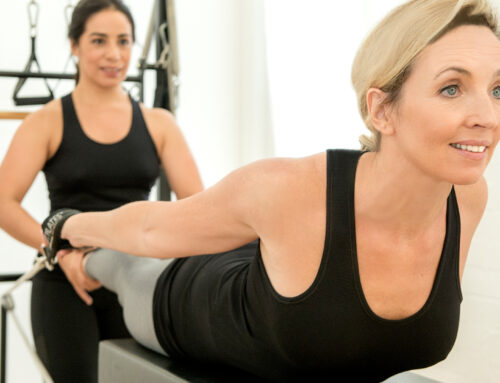
Among cross-training options, Reformer Pilates holds particular relevance for dancers because of its emphasis on core stability, controlled range of motion, and three-dimensional movement patterns—qualities that align closely with what dance technique demands but doesn’t systematically build.
The reformer also allows for targeted strength work through the exact ranges dancers use, including extreme hip flexion, controlled rotation, and extended leg positions, but with the resistance and support that allows you to build genuine strength rather than just flexibility.
Addressing Turnout Properly
One of the most common technical and injury-related issues in dance is forced turnout—rotating from the knee or ankle rather than the hip joint, because the deep hip rotators aren’t strong enough to support genuine hip rotation under the demands of class and performance.
In private sessions at InnerCore, we can specifically train the deep external rotators of the hip, building the strength to support genuine turnout rather than the compensated version that places stress on the knees and ankles. This is detailed, targeted work that’s difficult to achieve within a technique class setting.
Building Strength Without Excess Bulk
A common concern among dancers, particularly in aesthetic-focused styles, is that strength training will create unwanted muscle bulk that affects their lines. Reformer Pilates builds lean, functional strength through controlled, lengthened ranges of motion rather than the kind of training that typically creates significant hypertrophy.
Many dancers find that Pilates actually enhances their lines, by improving postural alignment and core control rather than detracting from aesthetic goals.
The Recovery Benefit
Beyond strength building, Reformer Pilates offers valuable active recovery between intensive rehearsal or performance periods. The low-impact nature allows you to continue training and maintaining body awareness without the cumulative joint stress of additional high-impact activity.
Individualised Attention for Individual Bodies
Every dancer’s body carries its own history—previous injuries, natural flexibility patterns, technical strengths and weaknesses specific to their training. Generic conditioning classes, much like generic Pilates classes, cannot address this individuality. Our private 1to1 format at InnerCore means every session is designed around your specific technical demands, injury history, and goals.
Integrating Cross-Training Into a Demanding Schedule
We understand that dancers’ schedules are often packed with class, rehearsal, and performance commitments. Even one weekly Pilates session, strategically placed, can provide significant benefit without overwhelming an already demanding training load. We work with you to find timing that complements rather than competes with your dance commitments.
Investing in Your Longevity
Dancers who incorporate intelligent cross-training throughout their careers often report longer, less injury-interrupted careers than those who rely solely on technique training. If you’re a dancer in London looking to build the structural support that complements your artistry, we invite you to experience our approach at InnerCore. Your first session is free—an opportunity to discuss your specific technical demands and discover how targeted conditioning can enhance your dancing.