We live in an age of anxiety. Between relentless news cycles, financial pressures, the demands of modern careers, and the invisible weight of social comparison, anxiety has become one of the defining health challenges of our time. While therapy, medication, and lifestyle changes all have their place in managing anxiety, movement, particularly the kind of mindful, breath centred movement practised at InnerCore, is increasingly recognised as one of the most powerful tools available.
Anxiety Lives in the Body
One of the most important shifts in our understanding of anxiety is the recognition that it isn’t purely a mental experience. Anxiety has a profound physical dimension: the raised shoulders, the held breath, the clenched jaw, the stomach in knots. These aren’t just symptoms of anxiety, they’re part of how anxiety perpetuates itself.
When your body is in a state of chronic tension, your nervous system reads those physical signals as confirmation that something is wrong. The tension reinforces the anxiety, and the anxiety reinforces the tension. Breaking this cycle requires addressing both the mental and physical dimensions simultaneously, which is precisely what Pilates does.
The Vagus Nerve and the Power of Breath
At the heart of Pilates’ effectiveness for anxiety is its emphasis on controlled, diaphragmatic breathing. This isn’t a coincidence or an aesthetic choice, it’s physiologically significant. Your vagus nerve, which runs from your brain through your heart, lungs, and abdomen, is directly stimulated by slow, deep breathing. Vagal activation promotes your parasympathetic nervous system, the part of your nervous system responsible for rest, calm, and recovery.
Every session at InnerCore begins with breath. Your instructor cues your inhale, guides your exhale, and brings your attention to the physical sensations of breathing. Over time, this practice trains your nervous system to find this calmer state more readily, not just during sessions, but in the anxious moments of everyday life.
Presence as Practice
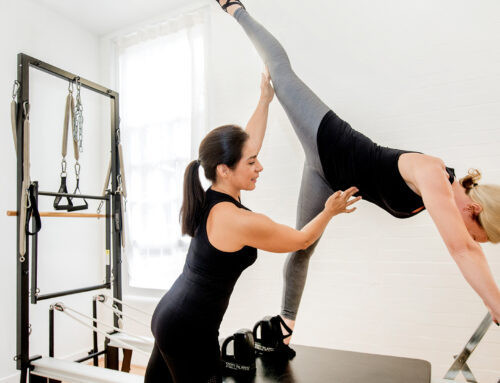
Anxiety thrives in the past and the future, regrets about what happened, worries about what might. Pilates, by contrast, demands absolute presence. You cannot ruminate about tomorrow’s problems while simultaneously maintaining pelvic stability during footwork on the reformer. The precision required by each movement anchors you firmly in the here and now.
This quality of presence isn’t just a happy side effect, it’s a practised skill. The more you train your mind to focus on physical sensation, breath, and alignment, the better you become at accessing that focused state when anxiety threatens to pull you away from the present moment.
Private Sessions and the Safety to Be Vulnerable
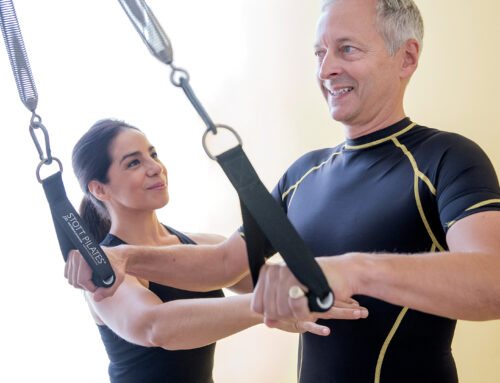
For people managing anxiety, the environment in which they exercise matters enormously. Group fitness classes can be activating rather than calming, the noise, the comparison, the pressure to keep up. At InnerCore, the private 1to1 format creates a contained, calm, and supportive space where there’s no performance pressure and no audience.
Many of our clients in Chelsea describe their session as a genuinely safe space, somewhere they can show up exactly as they are, without the social anxiety that group environments sometimes trigger. This safety is part of the therapeutic value.
Consistent Practice, Cumulative Calm
One session of Pilates won’t cure anxiety, but consistent practice creates cumulative change. Regular sessions gradually reset your nervous system’s baseline, build body awareness that helps you catch tension before it escalates, and establish a weekly rhythm of intentional self-care that has its own psychological value.
Many of our London clients report that after several months of regular practice, they notice themselves feeling more resilient, less reactive, and more able to access calm, not because their external circumstances changed, but because their internal relationship with stress has shifted.
Movement as Part of Your Mental Health Toolkit
We’re not suggesting Pilates replaces professional mental health support. For many people, it works beautifully alongside therapy, medication, or other interventions. What we are saying is that for those managing anxiety, the specific combination of controlled breath, mindful movement, and compassionate instruction available at InnerCore offers something that talk based therapies cannot: a way to address anxiety through the body as well as the mind.
If you’re in London and anxiety is affecting your quality of life, your first session at InnerCore is free. Come as you are, breathe a little more fully, and discover what movement can do for your mind.