Dancers are among the most dedicated athletes in the world. The combination of strength, flexibility, artistry, and endurance required for dance is extraordinary. Yet dancers also face unique physical challenges, repetitive movement patterns, asymmetrical demands, and a culture that sometimes prioritises aesthetics over longevity.
Pilates was actually developed with dancers in mind, and it remains one of the most beneficial complementary practices for anyone who dances seriously.
The Dancer’s Body: Strengths and Vulnerabilities
Dancers develop remarkable qualities: exceptional flexibility, beautiful lines, impressive cardiovascular endurance, and extraordinary body awareness. However, these strengths often come with corresponding vulnerabilities.
Hypermobility in the joints can lead to instability, repetitive movements create overuse injuries, turnout requirements stress the hips and knees, and the demands of specific techniques create muscular imbalances. Additionally, the aesthetic emphasis in dance sometimes encourages holding the body in ways that aren’t structurally sound.
Why Dancers Need More Than Dance Training
Dance training excels at teaching movement vocabulary, artistry, and performance skills. What it doesn’t always provide is balanced strength development, injury prevention strategies, or rehabilitation from the inevitable wear and tear of demanding choreography.
This is where Pilates becomes invaluable. It addresses the physical gaps that dance training alone can’t fill, providing the structural support that allows dancers to perform at their best while reducing injury risk.
Core Stability for Better Technique
Every dance movement, from a simple plié to a complex jump sequence, requires core stability. Yet many dancers have learned to use their larger, more superficial muscles rather than their deep stabilisers.
Pilates trains the exact muscles dancers need: the deep transverse abdominis, the pelvic floor, the multifidus along the spine. These muscles provide the stable centre from which all movement should initiate. When they’re functioning properly, your technique improves, your lines become cleaner, and your risk of injury decreases.
At InnerCore, we work with dancers to develop core control that translates directly to their technique. You’ll discover how to maintain pelvic and spinal stability during leg movements, initiate movement from your centre rather than your extremities, and control your alignment without gripping your shoulders or holding your breath.
Addressing the Flexibility-Strength Balance
Dancers often have exceptional flexibility but lack the strength to control that range of motion. This imbalance is a recipe for injury, hypermobile joints without adequate muscular support are vulnerable to strains, tears, and chronic instability.
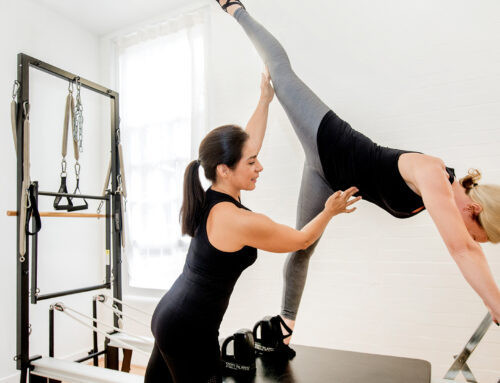
Reformer Pilates builds what’s called “active flexibility”, the ability to control your body throughout its full range of motion. You’re not just passively stretching; you’re strengthening through your entire range. This type of flexibility is far more functional and protective for dancers.
The reformer allows you to work through full extensions while maintaining proper alignment and control. You develop the strength to support your flexibility, making your movements both more beautiful and more sustainable.
Correcting Asymmetries and Imbalances
Dance is often asymmetrical. You have a favourite leg for balancing, a side you turn better on, and movement patterns that favour one side of your body. Over time, these asymmetries create imbalances that limit your performance and increase injury risk.
In private Pilates sessions at our Chelsea studio, your instructor observes these imbalances and designs programmes that address them. We identify which side is weaker or less coordinated, determine where you’re compensating, and find which movement patterns need retraining.
The reformer provides immediate feedback about asymmetries, if one side is weaker, you’ll feel it. This awareness allows you to specifically target and correct imbalances before they become problematic.
Improving Balance and Proprioception
Balance in dance isn’t just about not falling over—it’s about finding your centre effortlessly, maintaining control through complex movement sequences, and adjusting dynamically to changing demands.
Pilates enhances proprioception (your sense of where your body is in space) through exercises that challenge your stability in multiple positions and planes of movement. The unstable surface of the reformer’s moving carriage requires constant micro-adjustments, training exactly the kind of dynamic balance that dance requires.
Recovery and Injury Prevention
The physical demands of dance mean that recovery practices are essential, not optional. Pilates serves as active recovery, challenging enough to maintain and build strength, but gentle enough to allow your body to repair from more intense dance training.
The emphasis on breath, body awareness, and controlled movement also helps regulate your nervous system. Dance can be stressful—both physically and mentally. Pilates provides a space to move mindfully, release unnecessary tension, and reconnect with why you dance in the first place.
Rehabilitation for Dance Injuries
When injuries do occur, and they will if you dance seriously, Pilates provides an ideal rehabilitation environment. The reformer allows you to maintain fitness while protecting injured areas, work through limited ranges of motion safely, and progressively rebuild strength without re-injury risk.
At InnerCore, we’ve worked with dancers recovering from ankle injuries, knee problems, back pain, hip issues, and various overuse injuries. The private 1to1 format means every session is designed around your current condition, ensuring you’re always working therapeutically.
Ryan’s Approach to Dance and Movement
Our instructor Ryan brings a unique energy to working with dancers. Coming from a background that includes performance and movement, he understands the demands dancers face. He channels energy and excitement into challenging sessions that build the strength and control dancers need, while his international background brings a global perspective to movement training.
Working with an instructor who understands dance culture and demands means you receive guidance that’s specific to your needs as a dancer, not generic fitness advice.
Enhancing Artistry Through Body Awareness
Beyond the physical benefits, Pilates enhances the body awareness that makes dance truly artistic. When you deeply understand how your body moves, when you can feel exactly which muscles are engaging, and when you have precise control over your alignment, your dancing becomes more nuanced and expressive.
Many dancers find that Pilates helps them break through technical plateaus, not by drilling the same steps, but by addressing the underlying physical limitations that were preventing progress.
Making Pilates Part of Your Training
For dancers in London, adding weekly Pilates sessions to your training schedule isn’t just supplementary, it’s essential. Whether you’re training pre-professionally, dancing with a company, or maintaining your practice as an adult, Pilates provides the structural support that allows you to dance longer, with better technique, and with fewer injuries.
At InnerCore, we invite dancers to experience how our approach can enhance their performance. Your first session is free, giving you the opportunity to understand how Pilates can specifically benefit your dancing and address your individual needs.
Dance is demanding. Pilates helps ensure your body can meet those demands sustainably, keeping you performing at your best for years to come.