When people discover Pilates, they quickly encounter a fundamental choice: mat-based Pilates or reformer Pilates? While both approaches share core principles and offer significant benefits, they provide distinctly different experiences and serve different purposes. Understanding these differences helps you make an informed choice about which approach suits your goals and needs.
What Is Mat Pilates?
Mat Pilates is performed on a thick mat using primarily your body weight as resistance. It’s the more accessible form of Pilates—requiring minimal equipment, easier to practice at home, and often available in group class formats. The exercises Joseph Pilates originally developed were mat-based, making this the “classical” approach.
In mat work, you rely entirely on your own body control to execute movements. There’s no external support or assistance—your muscles must work in isolation to lift your legs, maintain your position, or control your spine. This creates significant challenges, particularly for beginners or those with limited core strength.
What Is Reformer Pilates?
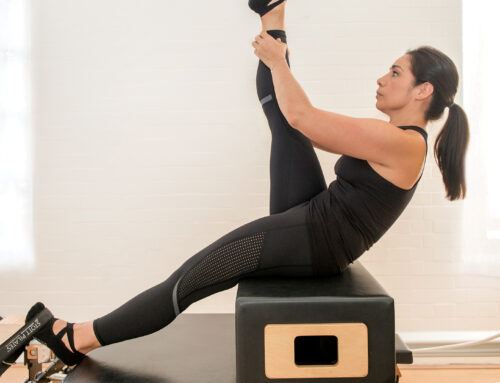
The reformer is a sophisticated piece of equipment with a moving carriage, adjustable springs, and various attachments. It looks somewhat intimidating at first—more machine than mat—but this equipment provides unique advantages. The springs create resistance that can either assist or challenge movement, depending on configuration.
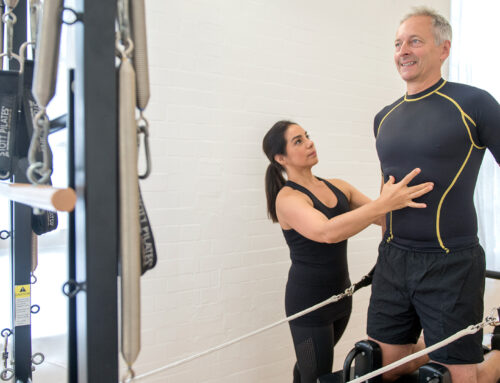
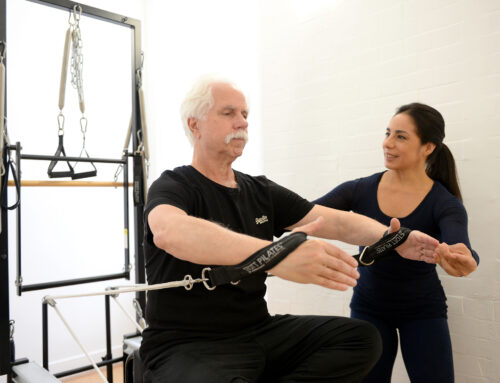
At InnerCore in Chelsea, all our sessions utilise STOTT PILATES® Reformer equipment. The reformer allows for exercises that simply aren’t possible on a mat, working your body through full ranges of motion with precise control and resistance.
The Support Advantage
One of the reformer’s greatest benefits is the support it provides. The carriage creates a stable surface for many exercises, the foot bar assists with balance in standing positions, and the shoulder blocks prevent you from sliding off the carriage. This support makes Pilates accessible to people who might struggle with mat exercises.
If you’re recovering from injury, dealing with chronic pain, or simply new to Pilates, the reformer allows you to work effectively while your body is still building the strength that mat exercises would require. You’re strengthening muscles that mat work would demand you already have.
Progressive Resistance
Mat Pilates offers limited options for adjusting difficulty—you can modify positions or reduce range of motion, but fundamentally, you’re always working against your body weight. The reformer, by contrast, provides infinite resistance variations. Springs can be added, removed, or combined to create precisely the challenge you need at your current level.
This progressive resistance is particularly valuable for building strength systematically. As you become stronger, we simply adjust the springs. There’s always a next level, always room to progress, without needing to learn entirely new movements.
Feedback and Body Awareness
The reformer provides tactile and proprioceptive feedback that mat exercises cannot. You feel the carriage moving beneath you, sense when you’re distributing weight unevenly, and receive immediate feedback if your form breaks down—the movement simply doesn’t happen smoothly.
This feedback accelerates learning. Your nervous system quickly understands what proper engagement feels like because the equipment provides clear information. On a mat, you must rely entirely on your instructor’s cues and your own internal sensing, which takes longer to develop.
Variety and Engagement
While mat Pilates offers a solid repertoire of exercises, the reformer exponentially expands movement possibilities. You can work standing, seated, kneeling, lying on your back, lying on your stomach, lying on your side, and even in inverted positions. This variety keeps sessions engaging and ensures comprehensive training of your entire body.
For clients across London seeking Pilates classes that maintain their interest and motivation, the reformer’s versatility is a significant advantage.
The Core Strength Question
Some Pilates purists argue that mat work is “harder” because you must support yourself entirely. This is true in one sense—mat exercises demand significant core strength just to execute properly. However, harder isn’t necessarily better, particularly when it prevents people from doing the work at all.
The reformer allows you to build the core strength that mat work requires. Rather than struggling through exercises with poor form or being unable to do them at all, you work at an appropriate level with good technique. Over time, this builds the strength for more challenging work—including mat exercises if that becomes a goal.
The Private Instruction Factor
At InnerCore, all our sessions are private 1to1, which changes the mat versus reformer equation significantly. In group mat classes, the instructor cannot provide individualised attention. Everyone does the same exercises regardless of whether they’re appropriate for their body. This one-size-fits-all approach limits effectiveness and increases injury risk.
In our private reformer sessions, every exercise is chosen specifically for you, modified as needed for your current capabilities, and progressed systematically as you develop strength and skill. This personalisation makes reformer work far more effective than group mat classes for most people.
Cost and Commitment Considerations
Mat Pilates classes are generally less expensive than reformer sessions, particularly in group formats. If budget is a primary concern, mat classes offer a more affordable entry point. However, consider the value proposition: group mat classes provide limited individual attention and may include exercises inappropriate for your level, while private reformer sessions deliver personalised programming and expert guidance throughout.
Many of our clients find that one weekly reformer session provides more benefit than multiple group mat classes, making the investment worthwhile when measured by actual results.
Can You Do Both?
The approaches aren’t mutually exclusive. Some people maintain a private reformer practice while attending mat classes for variety. Others use mat exercises as homework between reformer sessions. At InnerCore, we sometimes teach clients mat variations of reformer exercises they can practice at home, complementing their studio work.
Making Your Choice
For most people seeking Pilates in London, particularly those new to the practice, reformer sessions provide the most effective introduction. The equipment support, progressive resistance, and expert guidance in our Chelsea studio create optimal conditions for learning proper technique and building strength safely.
If you’re curious about experiencing the difference firsthand, your first session at InnerCore is free. You’ll discover why so many of our clients choose reformer work as their primary Pilates practice, year after year.