Walk into most Pilates studios, and you’ll likely find a room full of women. This gender imbalance has created an unfortunate perception: that Pilates is somehow “for women” or not challenging enough for men who want to build serious strength. Nothing could be further from the truth.
At InnerCore in Chelsea, we work with male clients ranging from City professionals to serious athletes, all of whom have discovered what elite sportsmen have known for decades: Pilates builds the kind of functional strength that actually translates to real-world performance.
Why the Misconception Exists
The association of Pilates with women stems partly from its history in dance rehabilitation and partly from marketing that has often positioned it as a gentle, flexibility-focused practice. While Pilates certainly improves flexibility, reducing it to just stretching ignores the method’s true nature as a comprehensive strength training system.
Joseph Pilates himself worked extensively with men, including boxers and performers. He understood that functional strength—the kind that protects your body and enhances performance—requires more than just lifting heavy weights. It requires control, stability, and neuromuscular coordination.
Where Traditional Gym Training Falls Short
Many men focus their training on traditional weightlifting—bench presses, deadlifts, squats. These compound movements are valuable, but they often create imbalances when not balanced with other work. You develop strong prime movers (the large muscles that create obvious movement) while neglecting stabilisers (the smaller muscles that protect joints and control movement quality).
This imbalance is why men who are strong in the gym still experience back pain, shoulder issues, and reduced mobility. You’ve built strength in a limited range of motion without developing the control and stability needed for varied, real-world demands.
What Pilates Actually Challenges
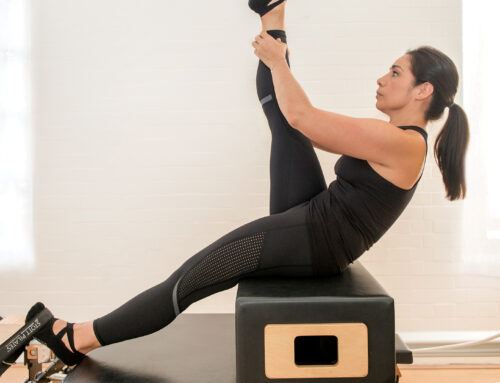
Make no mistake—Reformer Pilates at an appropriate level is brutally challenging. You’re asking your body to maintain precise alignment while moving against resistance in ways that expose every weakness. There’s nowhere to hide, no momentum to rely on, no compensating with stronger muscle groups.
The reformer challenges your body in several distinct ways: eccentric strength (controlling movement as you lengthen), isometric endurance (holding positions while other body parts move), stabilisation under load (maintaining alignment while resisting forces), and control through full range of motion (strength at end ranges where most people are weakest).
For men accustomed to gym training, the first few Pilates sessions are often humbling. Muscles they didn’t know existed fatigue quickly. Movements that look simple prove surprisingly difficult. This is precisely the point—you’re addressing the gaps in your current training.
Benefits for Athletic Performance
Professional athletes across every sport incorporate Pilates into their training. Footballers use it for injury prevention and core stability. Rugby players develop better body control and reduced injury rates. Cyclists address the imbalances created by their sport. Runners improve their form and reduce repetitive strain injuries.
At InnerCore, we work with recreational athletes throughout London who want the same advantages. Whether you’re training for a marathon, playing weekend football, or simply want to maintain your gym performance as you age, Pilates provides essential complementary work.
The functional strength you develop translates directly to better performance. Improved core stability makes your lifts safer and more effective. Better body awareness prevents compensations that lead to injury. Enhanced flexibility through strength (not just passive stretching) increases your usable range of motion.
Addressing Common Male-Pattern Issues
Men tend to develop certain physical issues more commonly than women, often related to different movement patterns and muscle development preferences. Lower back pain from weak core and tight hip flexors, shoulder impingement from overbuilt chest muscles and weak posterior chain, reduced flexibility limiting movement quality, and poor body awareness leading to compensatory patterns all respond particularly well to Pilates training.
In your private 1to1 sessions, we assess your specific patterns and imbalances, designing programmes that address your individual needs rather than following generic routines.
The Mental Challenge
Beyond the physical demands, Pilates requires something that many men find challenging: presence and patience. You must slow down, focus on quality over quantity, and accept that looking strong matters less than moving well. This mental shift—from pushing harder to moving smarter—often proves more difficult than the physical work itself.
However, this is precisely what makes Pilates so valuable. The body awareness and movement quality you develop inform everything else you do. Your weightlifting form improves. Your running becomes more efficient. Your daily movements feel smoother and less effortful.
No Ego, Real Results
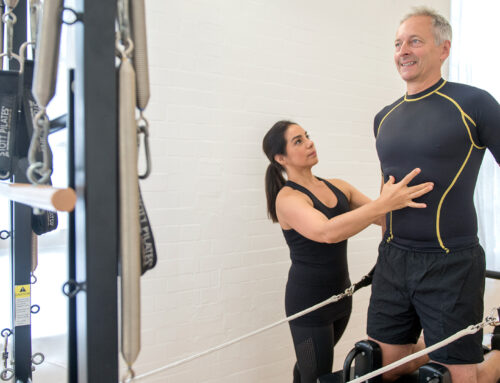
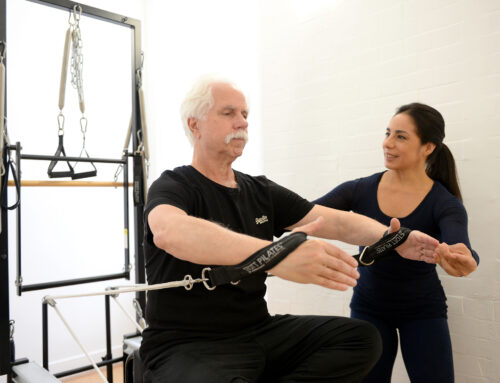
The private nature of our sessions at InnerCore eliminates the performance pressure that can exist in group fitness environments. It’s just you and your instructor, working on your specific needs without comparison or competition. This allows for honest assessment and genuine progress rather than ego-driven training that often leads to injury.
Our male clients consistently report that while they initially came for injury rehabilitation or as complement to other training, they continue because of how it makes them feel: stronger, more capable, and surprisingly challenged.
Taking the First Step
If you’re a man in London who’s been curious about Pilates but hesitant due to preconceptions, we invite you to experience it firsthand. Your first session at InnerCore is free—an opportunity to discover what professional athletes already know about this training method. Come ready to be challenged. Your assumptions about Pilates—and your own body—might just be transformed.