Everyone wants a strong core, but most people have no idea what that actually means. If your core training consists of crunches, planks, and the occasional sit-up, you’re barely scratching the surface of true core strength. At InnerCore in Chelsea, we take a fundamentally different approach—one that builds functional, comprehensive core strength rather than just superficial muscle tone.
What Your Core Actually Is
Your core isn’t just your abs. It’s a sophisticated cylinder of muscles that stabilises your entire torso: the deep transverse abdominis that wraps around your waist like a corset, your pelvic floor forming the bottom of the cylinder, your diaphragm creating the top, your multifidus supporting your spine, and yes, your rectus abdominis (the “six-pack” muscles).
These muscles must work as a coordinated team. When one area is weak or dysfunctional, the entire system suffers. This is why someone can have visible abs but still experience chronic back pain—their superficial muscles are strong, but their deep stabilizers aren’t functioning properly.
Why Traditional Ab Exercises Fall Short
Crunches and sit-ups train one movement pattern: spinal flexion. That’s useful, but it’s not functional for most of what your core actually needs to do. How often in daily life do you curl your spine forward against resistance? Rarely.
What you do need is a core that stabilises your spine while your limbs move independently, maintains proper alignment during complex movements, supports your breathing, and protects your back during unexpected movements or forces.
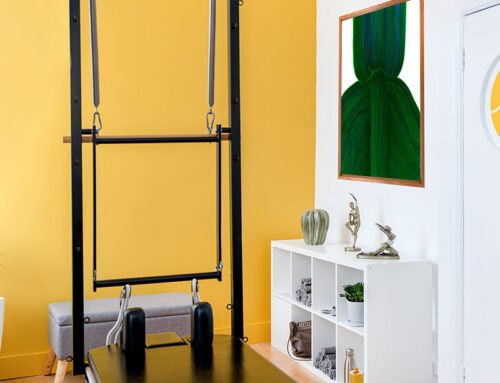
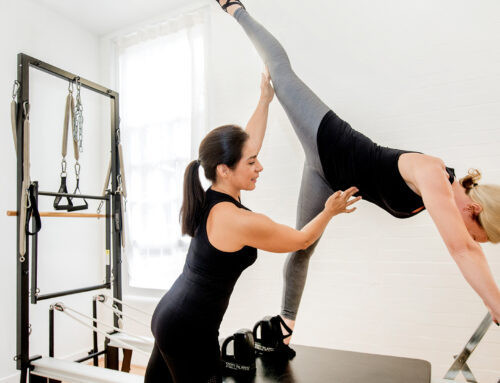
This is exactly what Reformer Pilates trains. The moving carriage creates instability that your core must control. The spring resistance challenges your ability to maintain alignment under load. The three-dimensional movement patterns ensure comprehensive strength rather than isolated muscle building.
The STOTT PILATES Approach
The methodology we use at InnerCore differs significantly from random core exercises. Every movement begins with proper pelvic and rib cage placement. We train your core to stabilize in neutral spine—the position you actually use in daily life—rather than always tucking your pelvis or flattening your back.
This respects your spine’s natural curves and creates more functional strength. You’re training your core the way it actually needs to work when you’re walking, lifting, reaching, or simply standing.
Feeling the Connection
Many people have been doing core exercises for years without ever truly connecting to their deep stabilizers. They’re using momentum, gripping with their neck and shoulders, or relying on their hip flexors instead of their abs.
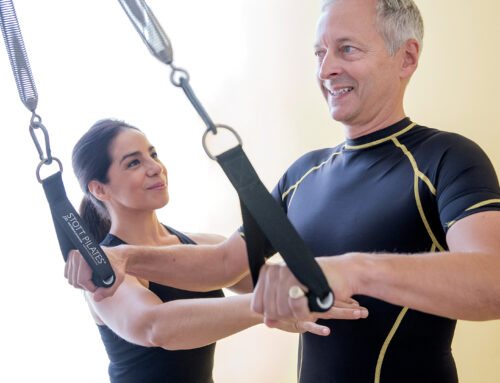
In private 1to1 sessions, your instructor can help you find that deep core connection through precise cueing, hands-on guidance when appropriate, and the feedback provided by the reformer itself. Once you understand what proper core engagement feels like, that awareness carries over into all your movements.
Beyond Aesthetics to Function
Will Pilates give you visible abs? Possibly, if you’re lean enough. But more importantly, it will give you a core that actually functions—one that protects your back, supports your posture, enhances your athletic performance, and improves your balance.
These functional benefits impact your quality of life far more than aesthetic changes alone. The confidence that comes from moving well, feeling stable and strong, and living without back pain is worth far more than visible abdominal definition.
At InnerCore, building true core strength from the inside out isn’t just our name—it’s our philosophy. Your first session includes assessment of your current core function and introduction to how these deep stabilisers should work. From there, we design a programme that addresses your specific needs and builds comprehensive, lasting core strength.