The modern workplace is quietly wreaking havoc on our bodies. Whether you’re working from a sleek office in the City or your kitchen table at home, the cumulative effect of hours spent hunched over screens is creating a generation of people dealing with chronic discomfort before they even reach middle age.
If you’re reading this from your desk right now, take a moment to notice: are your shoulders rounded? Is your head jutting forward? How long have you been sitting? These patterns aren’t just uncomfortable, they’re reshaping your body in ways that affect everything from your breathing capacity to your confidence.
The Reality of “Sitting Disease”
Medical researchers have coined the term “sitting disease” to describe the cluster of health issues associated with prolonged sedentary behaviour. Beyond the obvious musculoskeletal complaints, extended sitting affects your cardiovascular health, metabolic function, and even mental wellbeing.
For professionals working in London offices, the average person sits for 8-10 hours daily when you factor in commuting time. Your body wasn’t designed for this level of immobility, and it’s responding accordingly with tightness, weakness, and pain.
What Happens to Your Body When You Sit All Day
Let’s be specific about the physical changes that occur. Your hip flexors become chronically shortened from the seated position, your glutes essentially “switch off” from lack of use, your upper back rounds forward to accommodate looking at screens, your chest muscles tighten while your upper back muscles weaken, your core loses activation and becomes less effective at stabilising your spine, and your neck juts forward, creating what’s now called “tech neck.”
These aren’t just aesthetic issues, they’re functional problems that make everyday movements harder and more painful. Picking up shopping becomes a back injury risk. Carrying a child strains your shoulders. Even walking can feel effortful when your body is this out of balance.
Why Generic Exercise Often Misses the Mark
You might think that hitting the gym after work would counteract all that sitting. Unfortunately, if you’re exercising with these ingrained postural patterns, you’re often just reinforcing them. You might be strengthening your chest when you really need to strengthen your back. You might be tightening already-tight hip flexors with certain ab exercises.
This is where the precision of Pilates becomes invaluable. At InnerCore, we assess your individual patterns and design programmes that specifically address the imbalances created by your work demands.
The Reformer Advantage for Office Workers
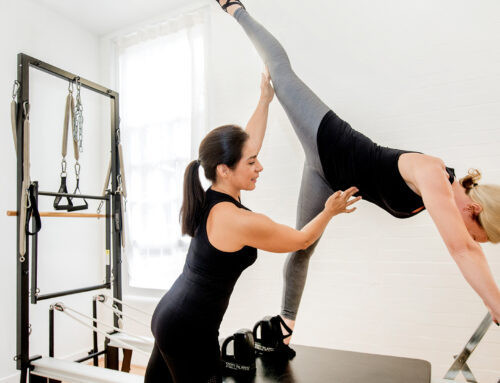
The Pilates reformer is particularly effective for people who spend their days seated. The machine allows us to open your chest and strengthen your upper back in ways that mat exercises simply cannot achieve. The spring resistance helps retrain muscles that have essentially forgotten how to work properly.
During your sessions in our Chelsea studio, you’ll work through movements that directly counteract your daily patterns. Hip flexor lengthening, glute activation, thoracic spine extension, scapular strengthening, and deep core reconnection all become part of your regular practice.
Beyond the Physical: Mental Benefits for Busy Professionals
The corporate world isn’t just physically demanding, it’s mentally exhausting. The constant connectivity, decision fatigue, and pressure to perform take their toll on your nervous system. You’re operating in a chronic state of low-level stress that affects everything from your sleep quality to your patience with loved ones.
Pilates classes offer something increasingly rare in modern life: an hour where your mind must focus entirely on your body. You cannot think about your inbox when you’re maintaining pelvic stability during leg circles. You cannot worry about tomorrow’s presentation when you’re coordinating breath with movement.
This forced presence creates a mental break that many of our London clients describe as essential for their overall wellbeing. The breathing techniques alone help regulate your nervous system, shifting you from that constant “fight or flight” state into something calmer and more sustainable.
Creating a Realistic Practice for Busy Schedules
We understand that adding another commitment to your already packed schedule feels overwhelming. That’s why we recommend starting with just one session per week. Consistency matters more than frequency, and one weekly session creates far more benefit than sporadic, intense efforts.
Our early morning slots (from 7:00 AM) allow you to complete your session before heading to the office. For some clients, this morning practice sets the tone for their entire day, they sit taller, move better, and feel more grounded. Others prefer lunchtime or evening sessions as a way to decompress and transition from work mode.
We also offer Zoom sessions for those weeks when getting to Chelsea isn’t feasible. The flexibility ensures your practice continues even during your busiest periods.
Small Changes, Significant Impact
You don’t need to completely overhaul your life to see benefits. Our clients report noticeable improvements within just a few weeks: reduced shoulder and neck tension, less frequent headaches, improved posture that they can maintain throughout the day, better sleep quality, and increased energy levels.
These changes compound over time. Six months of weekly Pilates practice creates a fundamentally different body than you started with, one that’s more resilient to the demands of desk work and office life.
Your Body Deserves Better
You wouldn’t ignore a warning light on your car dashboard, yet many of us ignore the warning signs our bodies send, the stiffness, the aches, the tightness. These signals indicate that something needs attention before it becomes a more serious problem.
At InnerCore, we invite London professionals to prioritise their physical health with the same commitment they bring to their careers. Your first session is free, allowing you to experience our approach and understand how Pilates can specifically address the challenges of office work. Your body carries you through your entire life, it deserves care that’s thoughtful, effective, and sustainable.