Most people come to Pilates after something goes wrong, a back injury, a knee problem, or persistent pain that won’t resolve. But what if you could prevent those issues from happening in the first place? This is where Pilates becomes not just rehabilitative but truly preventative.
The Pattern Behind Most Injuries
Whether you’re a runner, a tennis player, a desk worker, or simply navigating daily life, most non-traumatic injuries follow a predictable pattern. They begin with muscular imbalances, where certain muscles become overactive while others switch off. This creates faulty movement patterns where your body compensates for weakness or instability.
Over time, these compensations put stress on joints, tendons, and ligaments that weren’t designed to handle those loads. Eventually, something gives, a strained lower back, plantar fasciitis, a shoulder impingement, or knee pain that appears “out of nowhere.”
The truth is, these injuries rarely come out of nowhere. Your body has been sending warning signals, tightness, minor discomfort, reduced range of motion, that often get ignored until they become impossible to dismiss.
How Pilates Identifies Weaknesses Before They Become Problems
One of the greatest values of working with a skilled Pilates instructor in a 1to1 setting is that they can identify these imbalances early. During your sessions at InnerCore, your instructor observes how you move, noticing patterns you’re completely unaware of.
Do you favour one side? Does your pelvis tilt when you shouldn’t be moving it? Are you gripping with your neck and shoulders when your core should be working? These observations inform your programme, addressing vulnerabilities before they lead to injury.
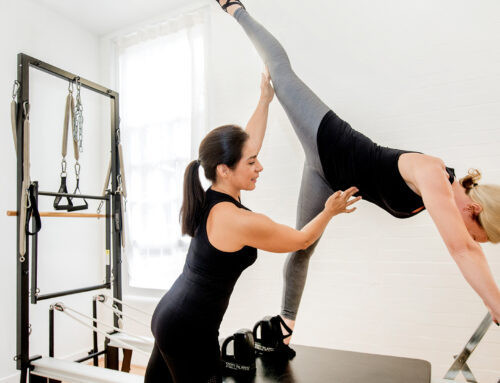
The reformer itself provides immediate feedback. If one side is weaker, you’ll feel it. If your core isn’t stabilising properly, the movement falls apart. This real-time information allows you to correct issues at their source.
Building Resilient Movement Patterns
Pilates doesn’t just strengthen muscles, it teaches your body to move well. The focus on alignment, control, and proper muscle recruitment creates movement patterns that protect your joints and distribute forces appropriately.
When you train your body to maintain a stable spine while your limbs move, you’re preventing back injuries. When you develop proper scapular control, you’re protecting your shoulders. When you strengthen your glutes and teach them to fire correctly, you’re taking stress off your knees and lower back.
These aren’t isolated benefits, they compound. Better movement in one area supports better movement everywhere. Your body learns to work as an integrated system rather than a collection of parts fighting against each other.
The Role of Flexibility and Mobility
Strength without flexibility is a recipe for injury. Tight muscles restrict movement, forcing your body to compensate in ways that create stress elsewhere. Pilates addresses both strength and flexibility simultaneously.
The reformer allows you to strengthen through full ranges of motion, building what’s called “active flexibility”, the ability to control your body throughout its range, not just passively stretch. This type of flexibility is far more functional and protective than static stretching alone.
Complementing Your Other Activities
Whether you run, cycle, play tennis, or do any other sport, Pilates serves as the perfect complement. It addresses the imbalances and repetitive strain patterns that your primary activity creates.
Runners develop tight hip flexors and weak glutes, Pilates addresses both. Tennis players often have shoulder imbalances and rotational issues, Pilates corrects these. Cyclists benefit from core stability and spinal mobility that cycling doesn’t provide.
At our Chelsea studio, many clients come specifically to support their other athletic pursuits. They’ve learned that the hour they spend on the reformer each week prevents injuries that would sideline them for weeks or months.
Starting Your Prevention Practice
You don’t need to wait for an injury to benefit from Pilates. In fact, the best time to start is before you have problems. At InnerCore, we work with clients of all fitness levels and abilities, creating programmes that build resilience and address your specific risk factors.
Your first session includes a movement assessment that identifies areas of weakness or restriction. From there, we design a tailored programme that strengthens your vulnerabilities and optimises how you move. It’s an investment in staying active and pain-free for years to come.